
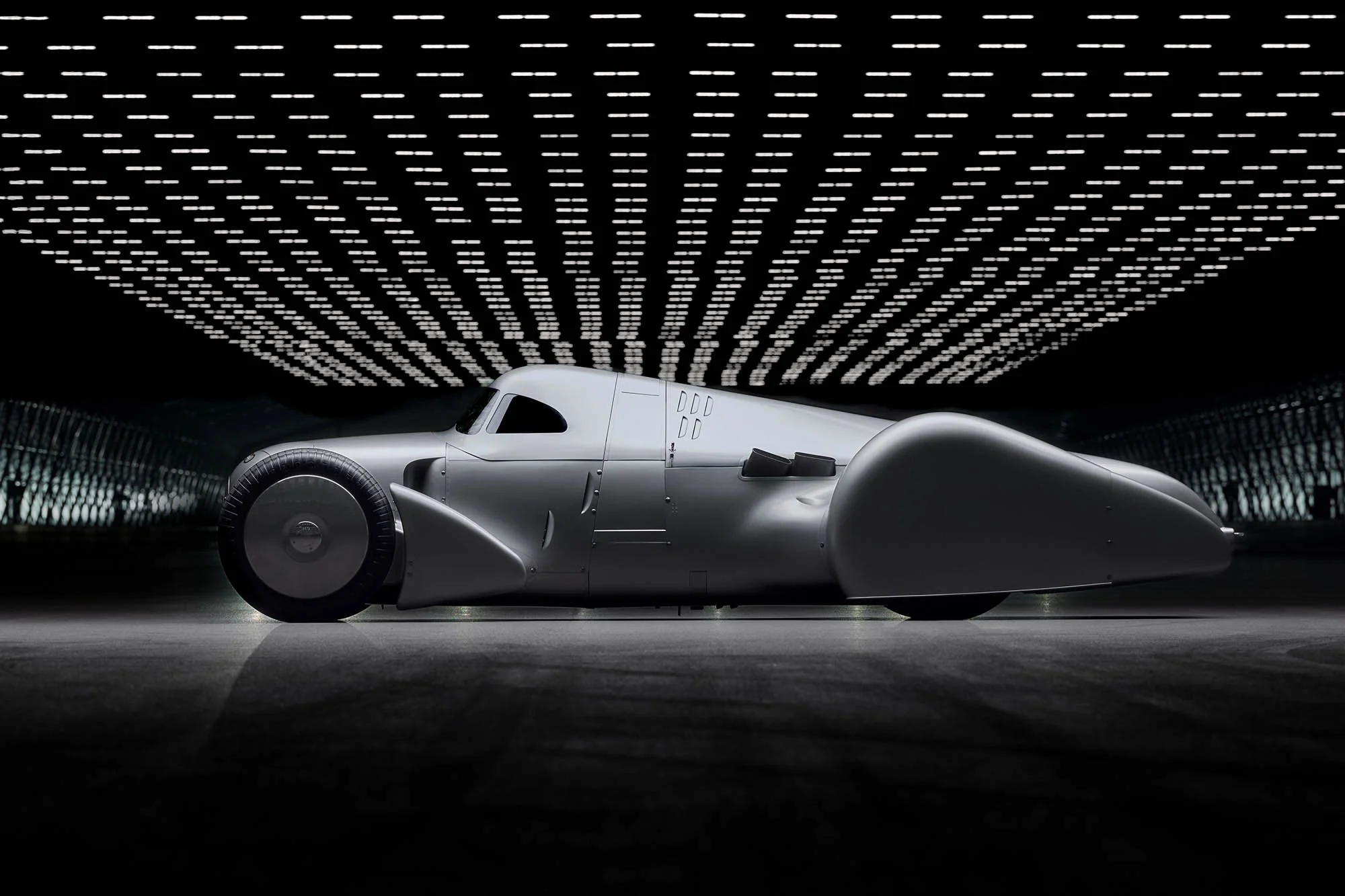
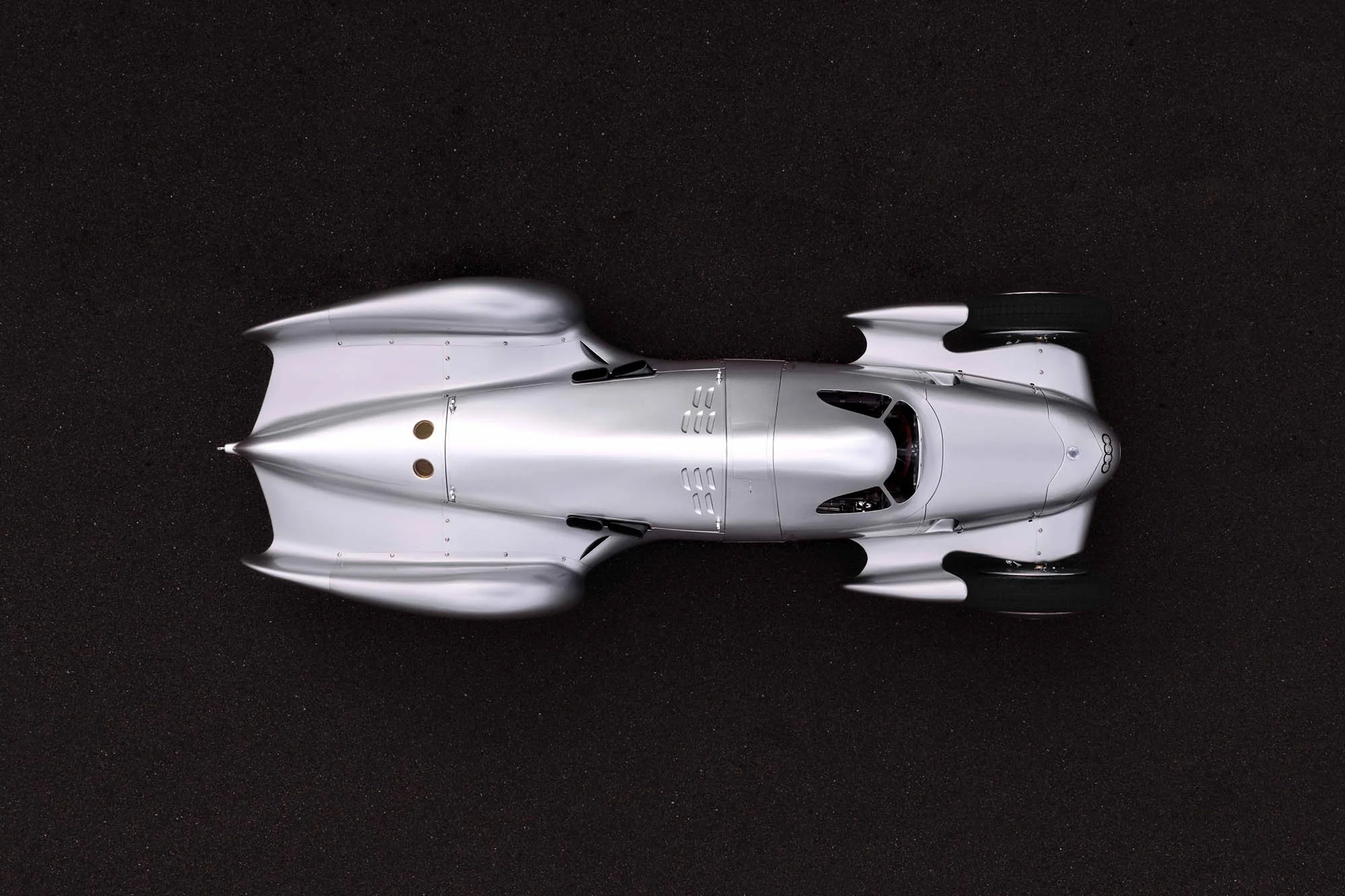
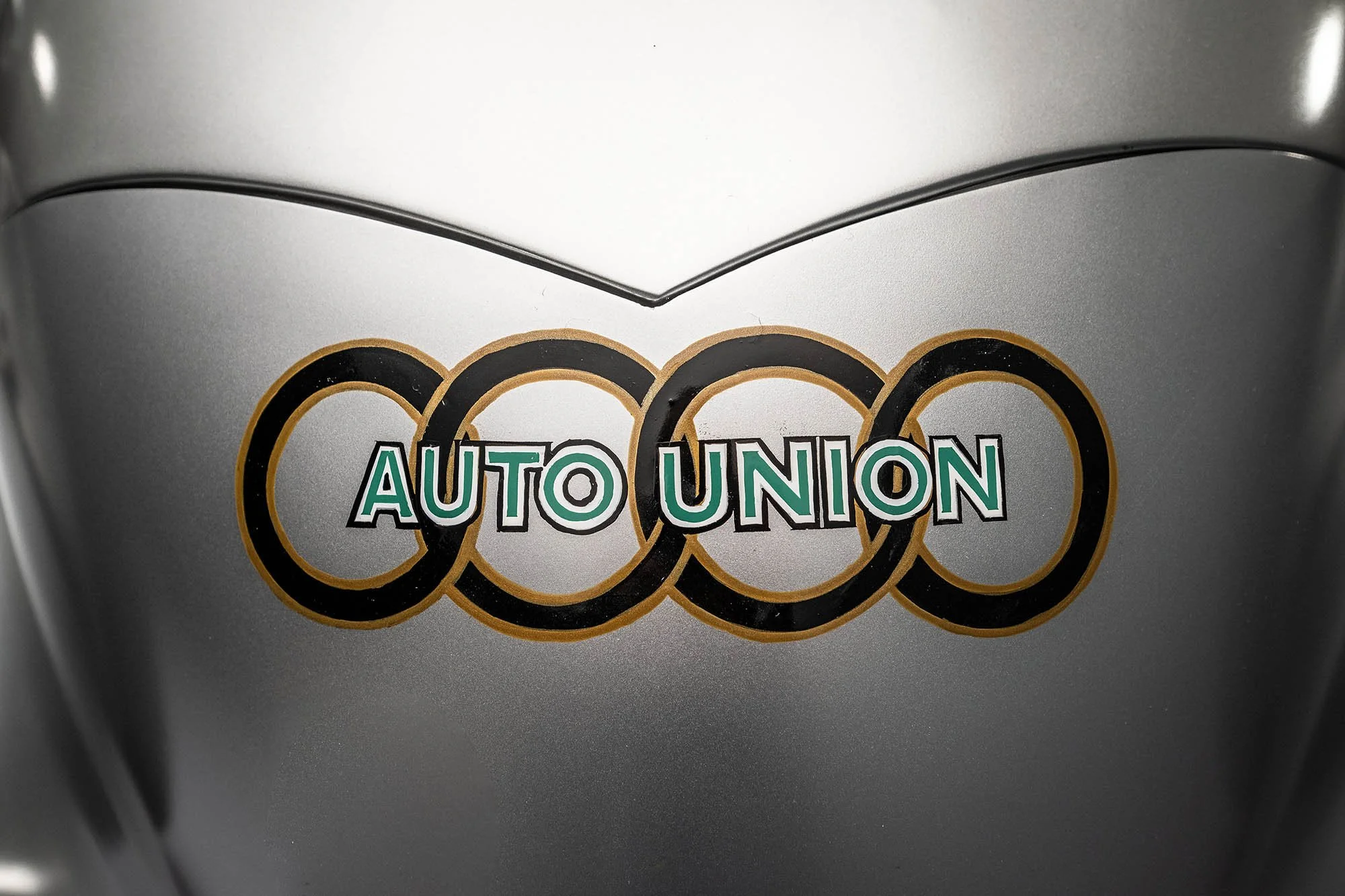
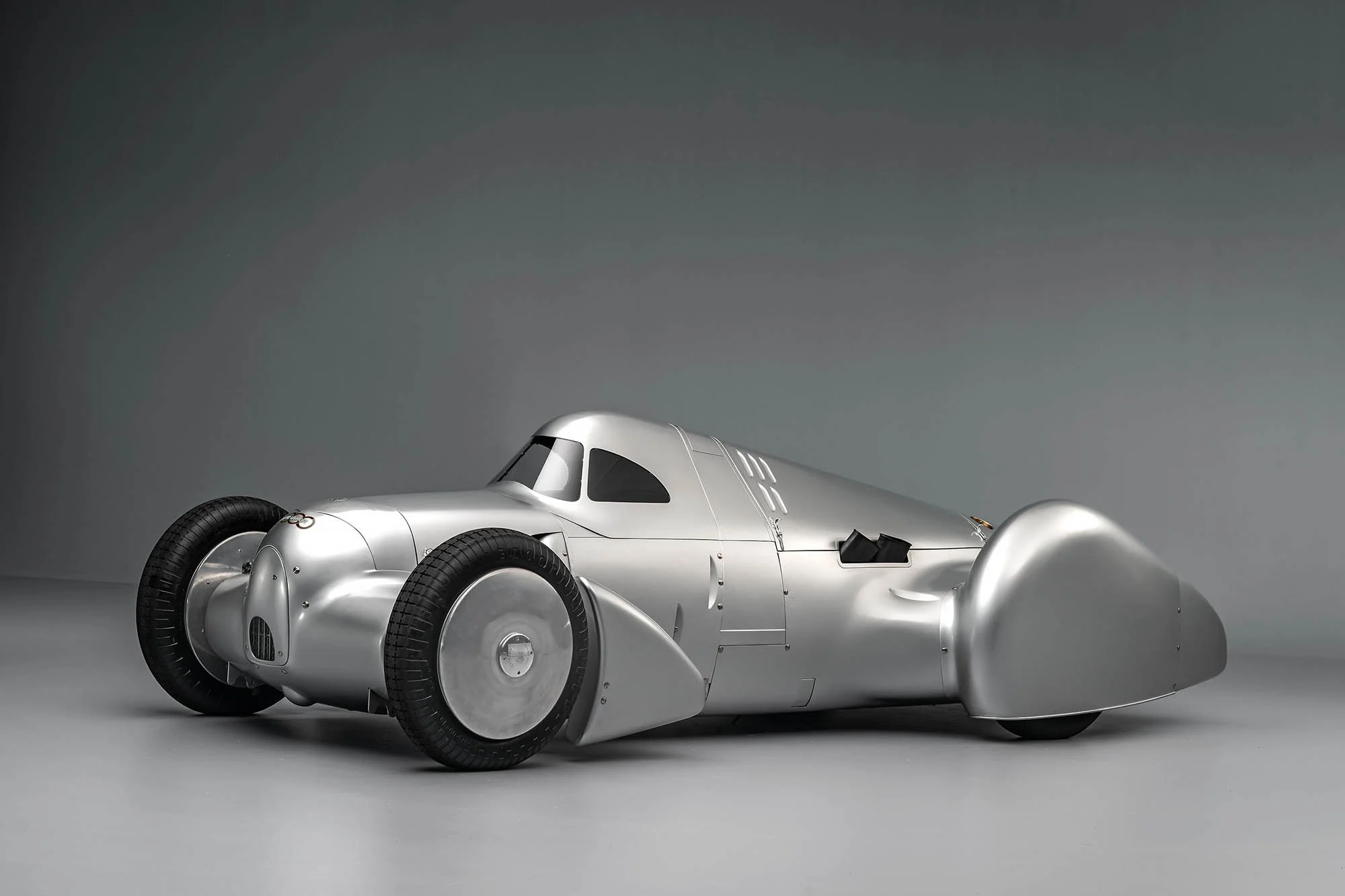
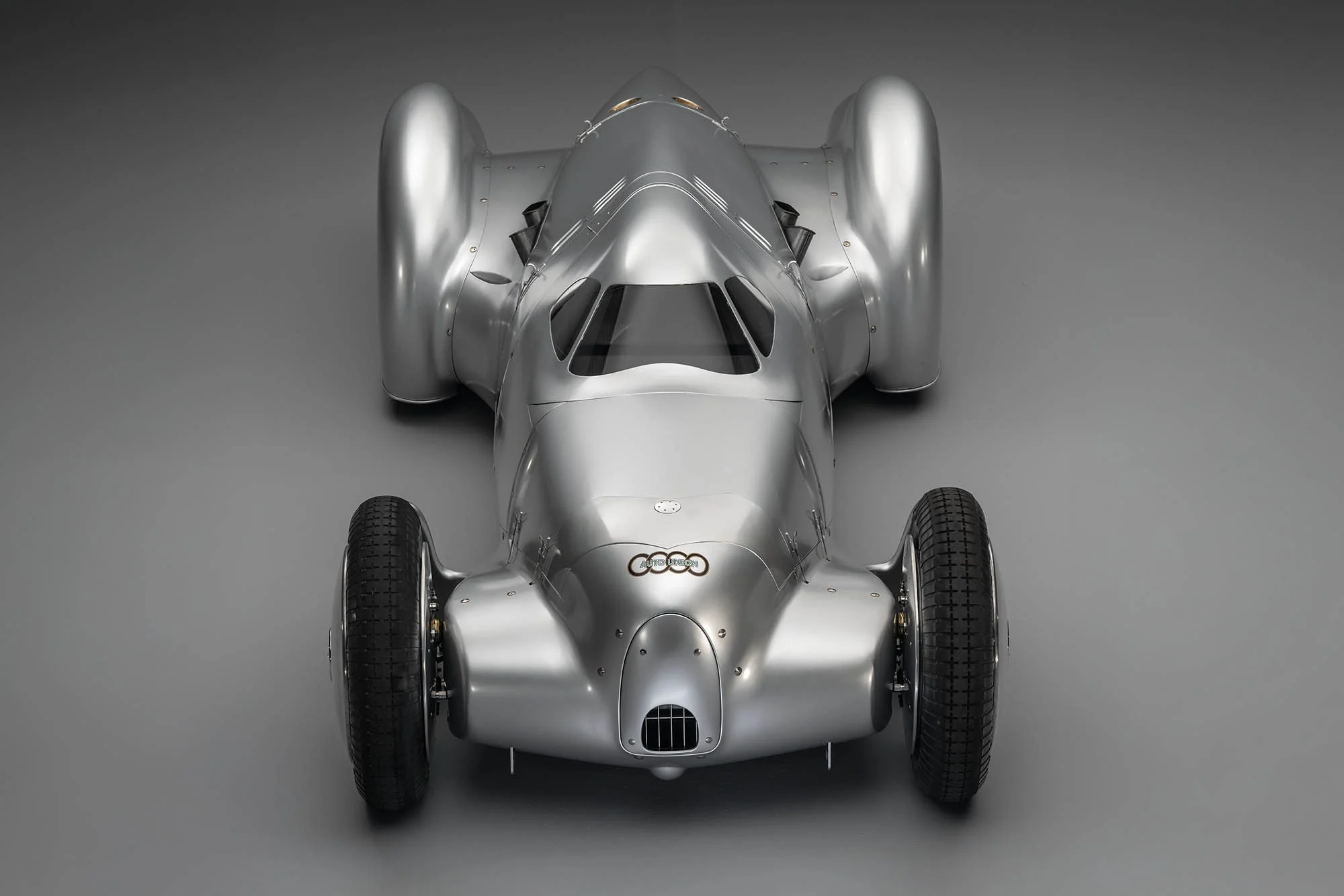
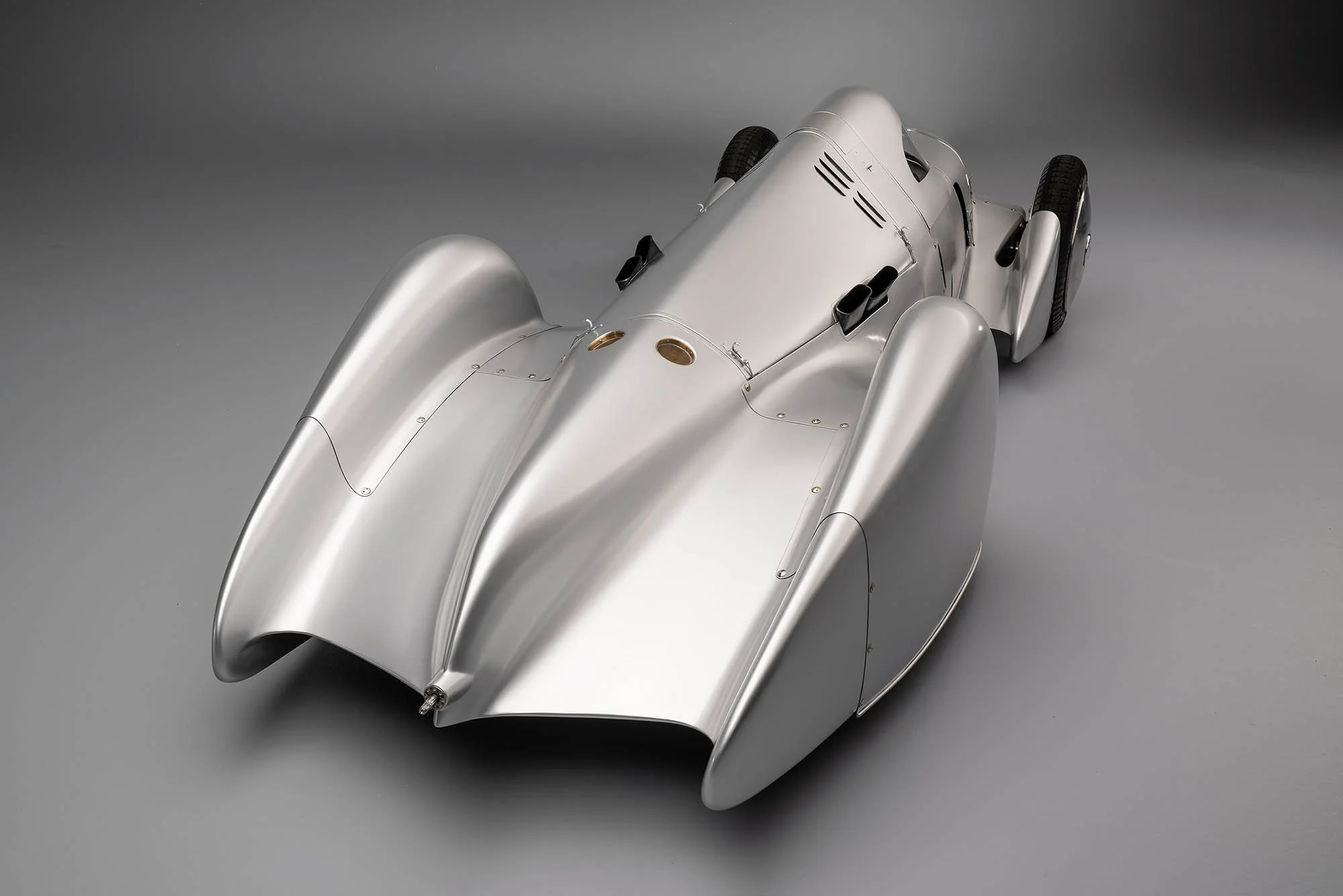
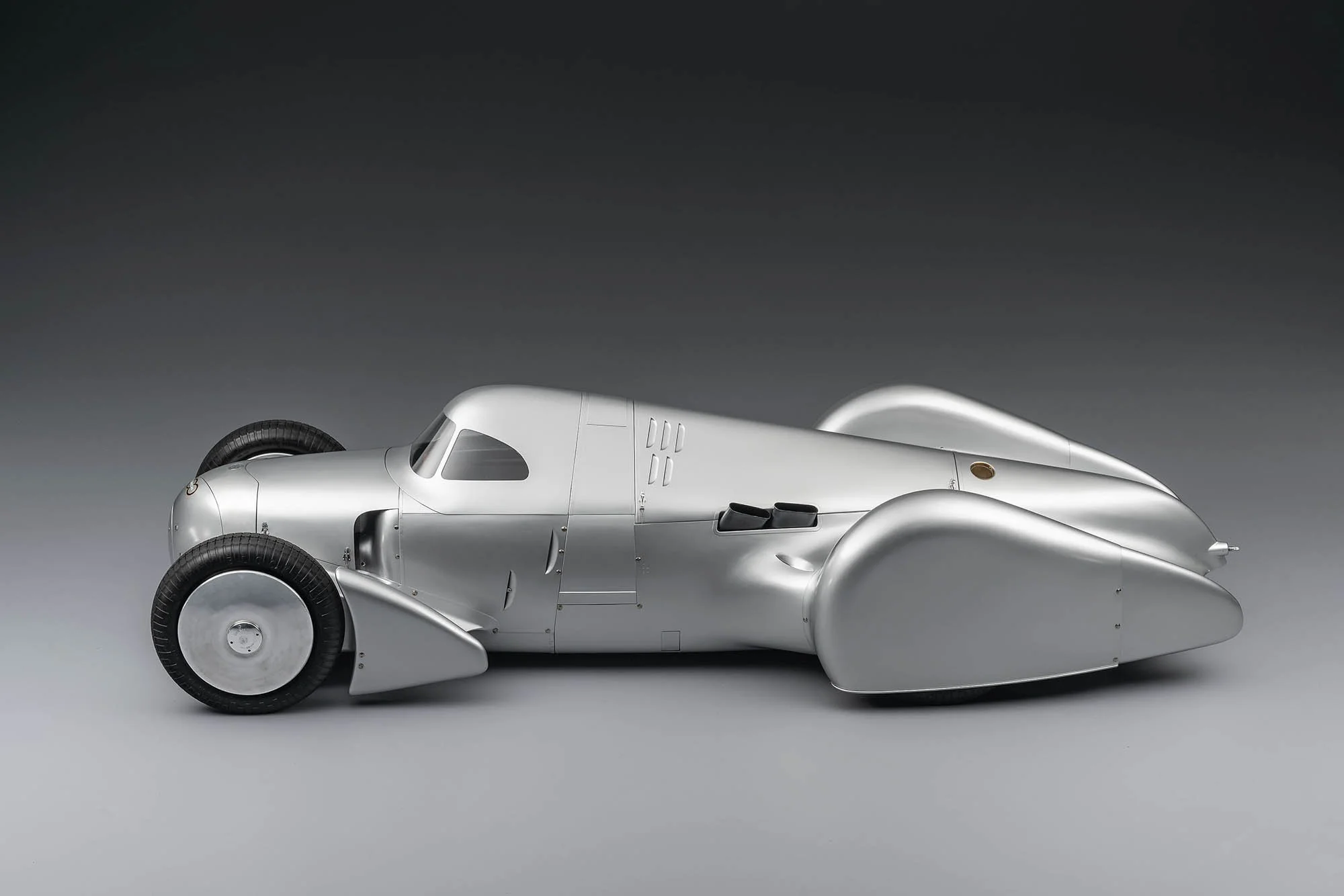
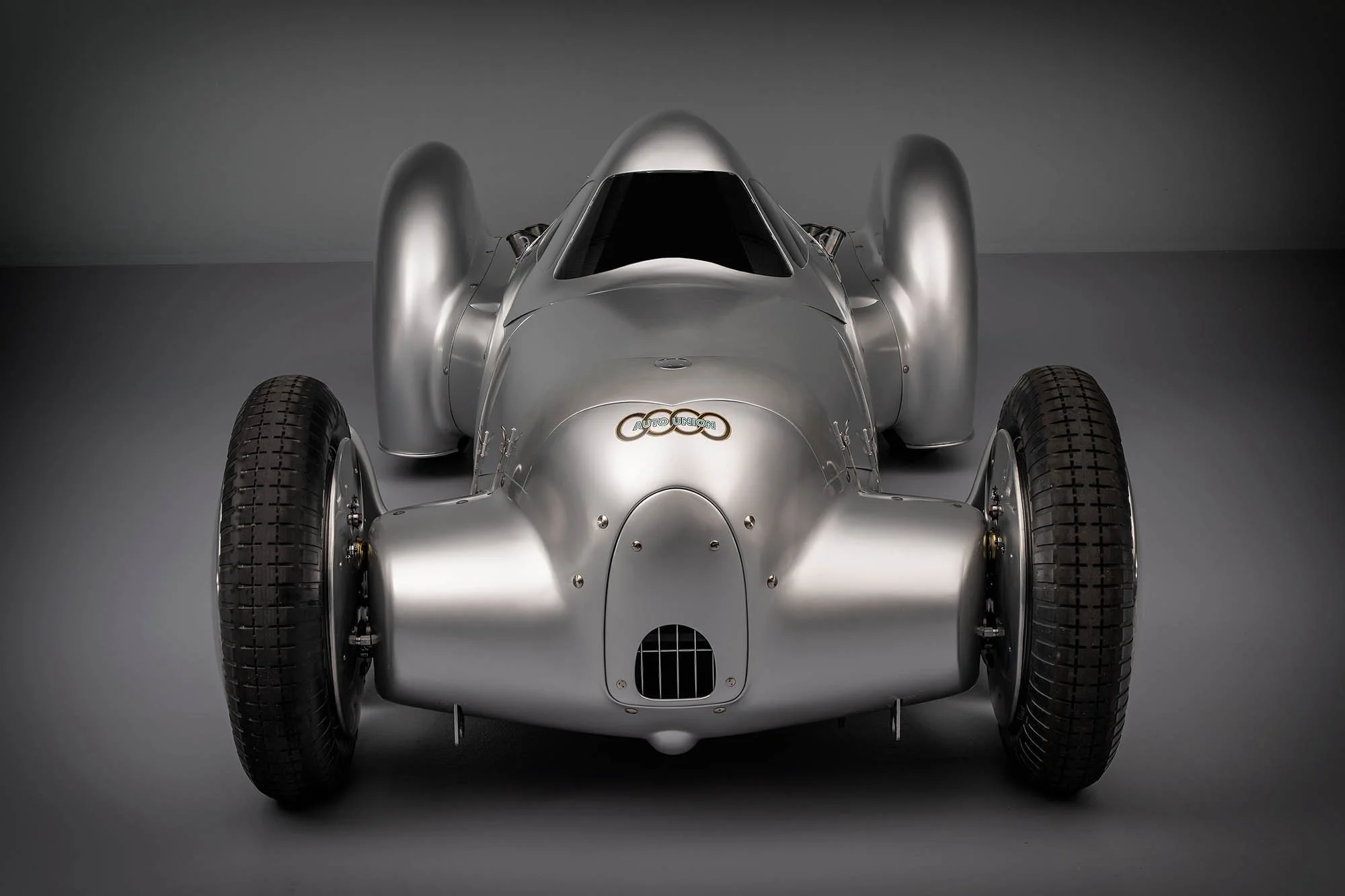
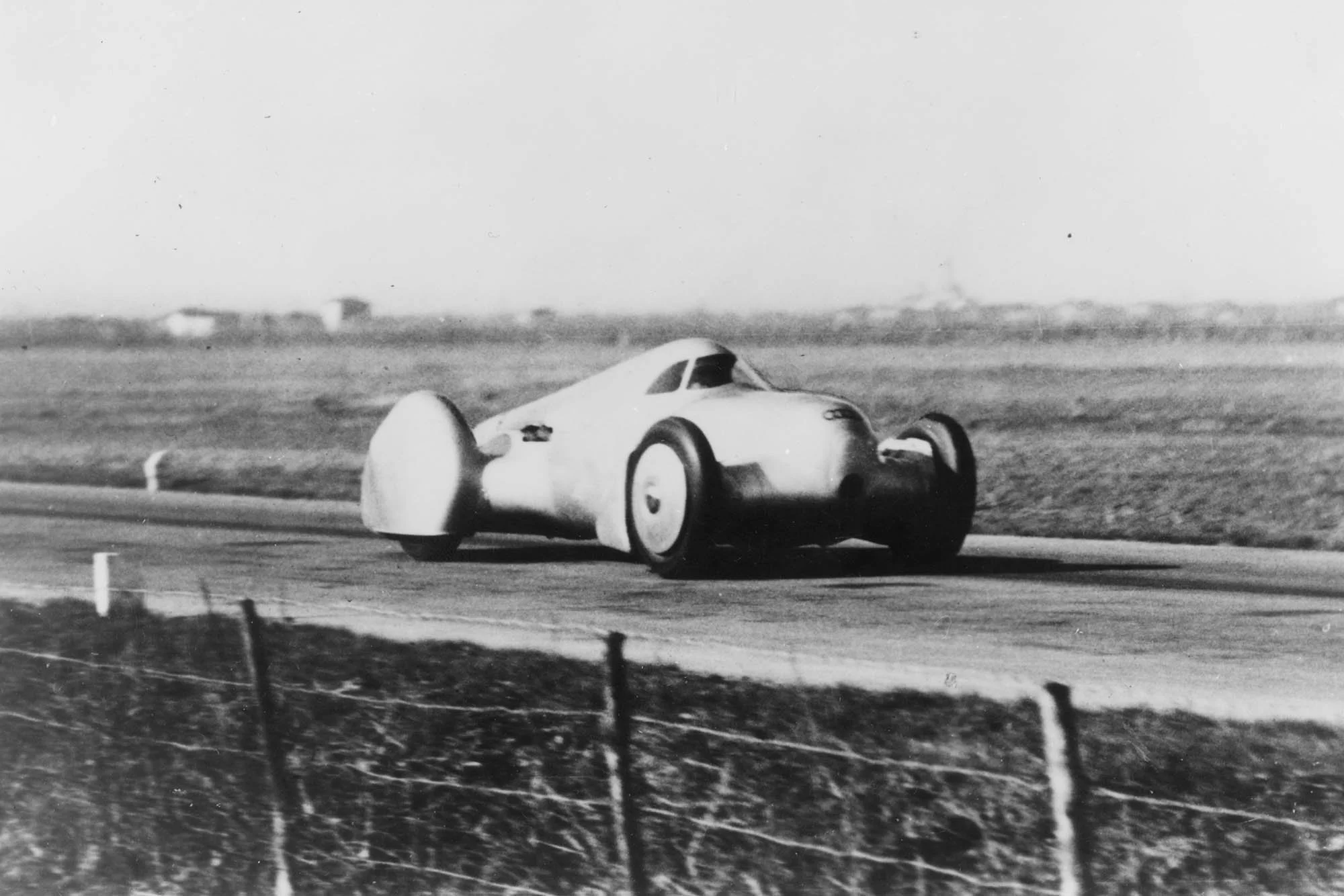
Known as the Auto Union Lucca, the streamlined Rennlimousine was developed specifically to chase speed records during one of motorsport’s most extraordinary periods. On 15 February 1935, Hans Stuck took the car to an average speed of 199 mph over a flying-start mile near Lucca on an Italian autostrada, with a measured peak of 203 mph. At the time, it was hailed as the fastest road racing car in the world.
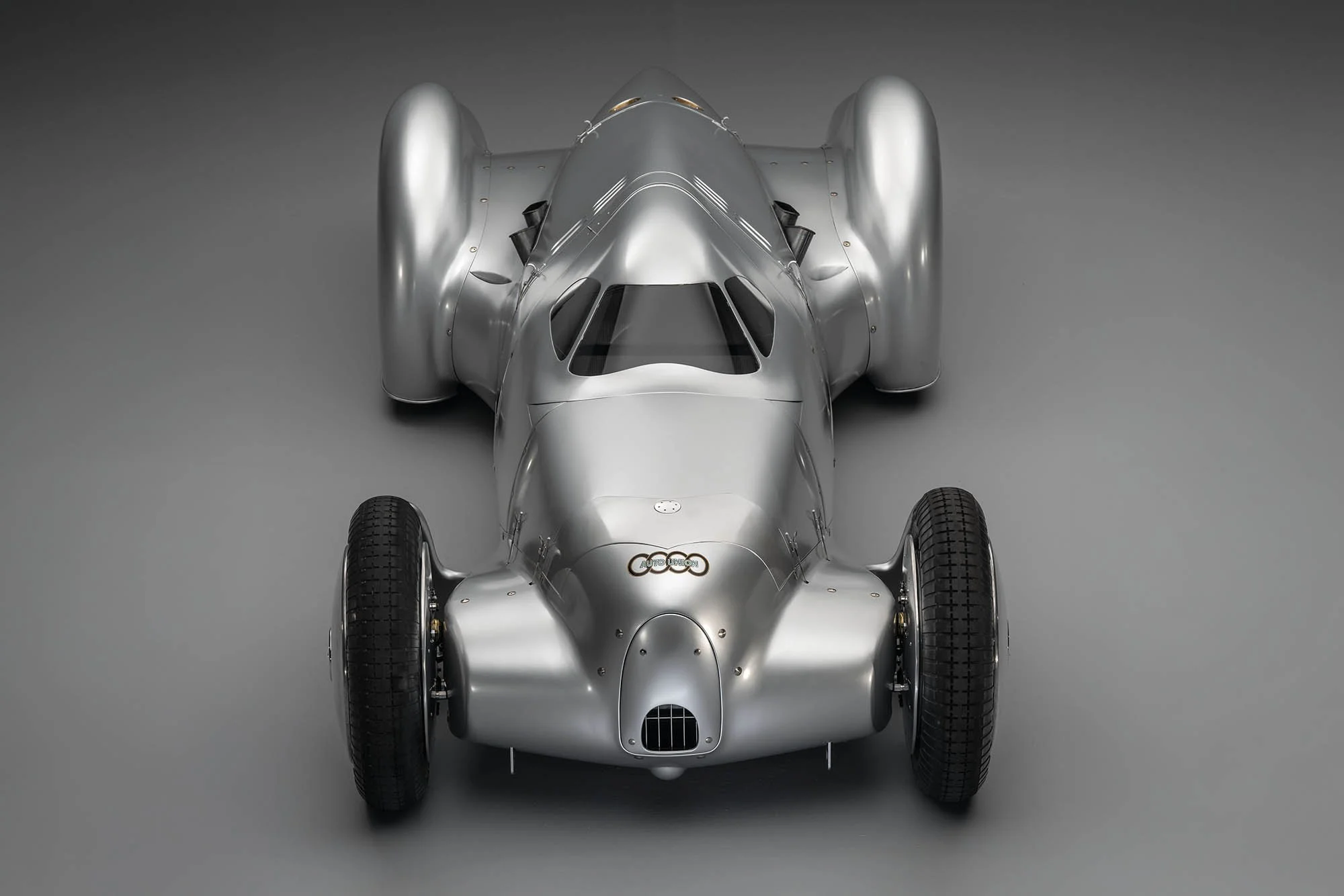
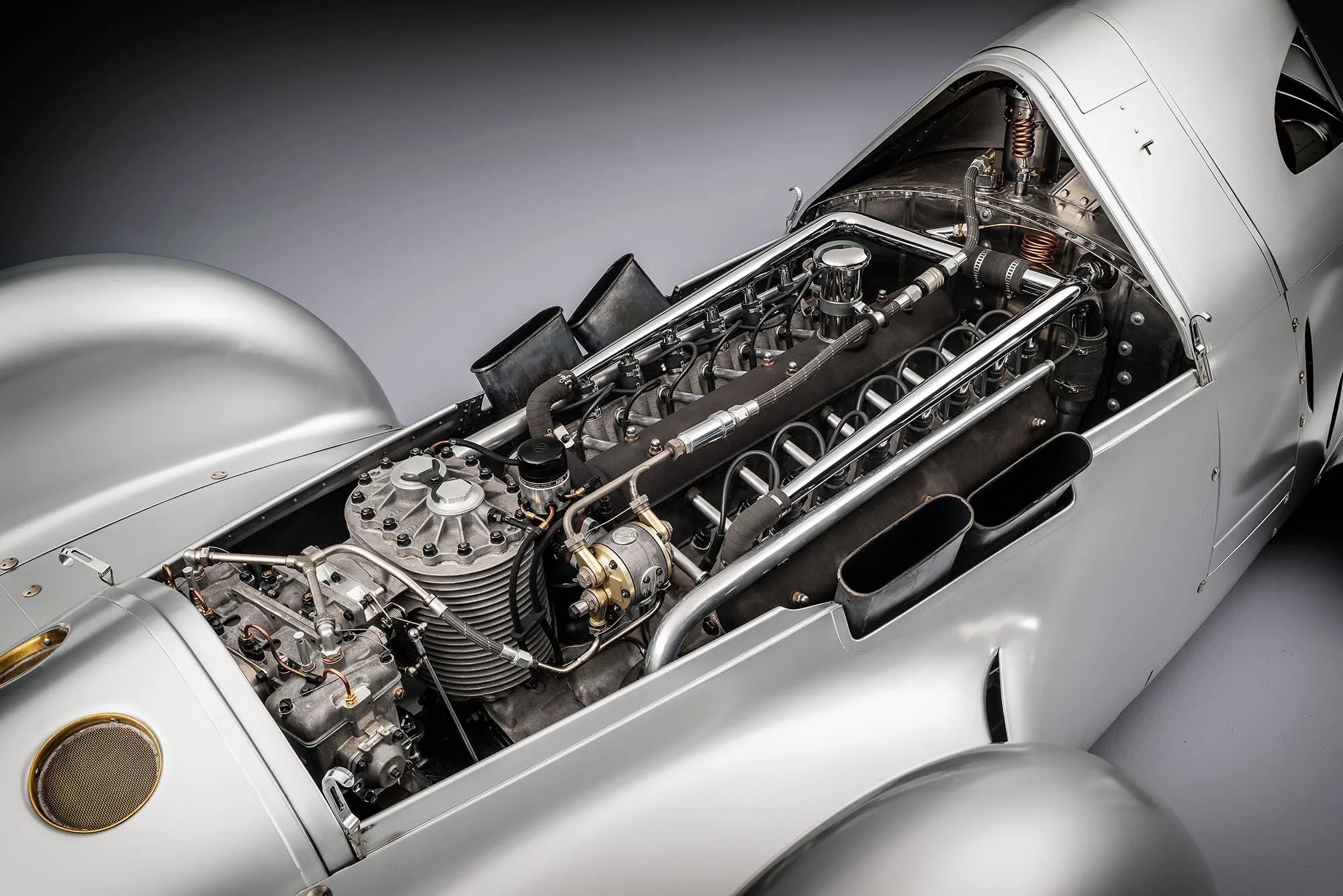
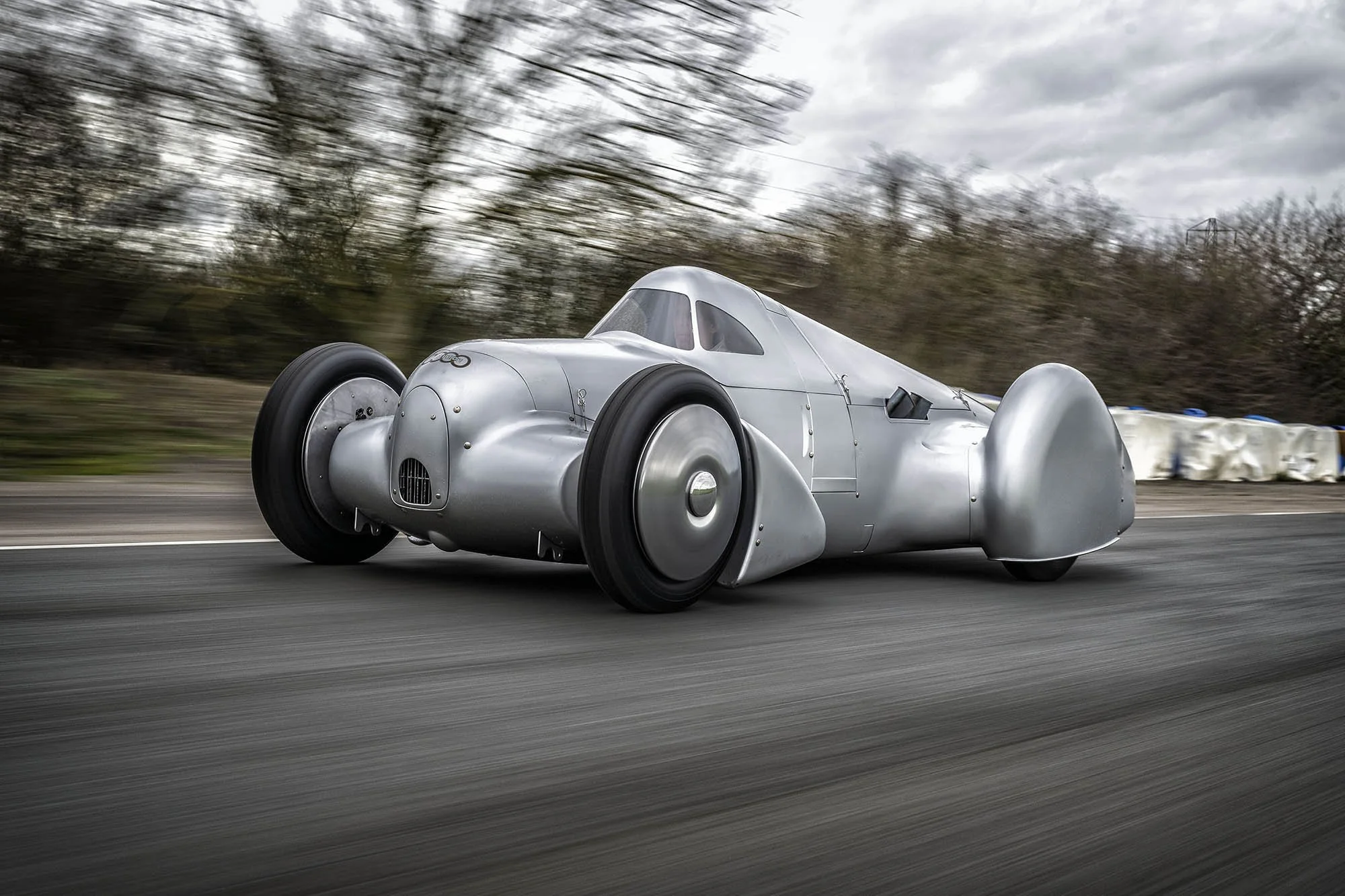
Its shape was as radical as its performance. Developed using wind-tunnel testing at Berlin-Adlershof, the car featured a fully enclosed cockpit, teardrop-shaped wheel arches, covered wheels and a dramatically tapered tail. Underneath sat a 16-cylinder engine, with Auto Union pursuing the same simple formula that still defines fast cars today: more power, less weight and better aerodynamics.
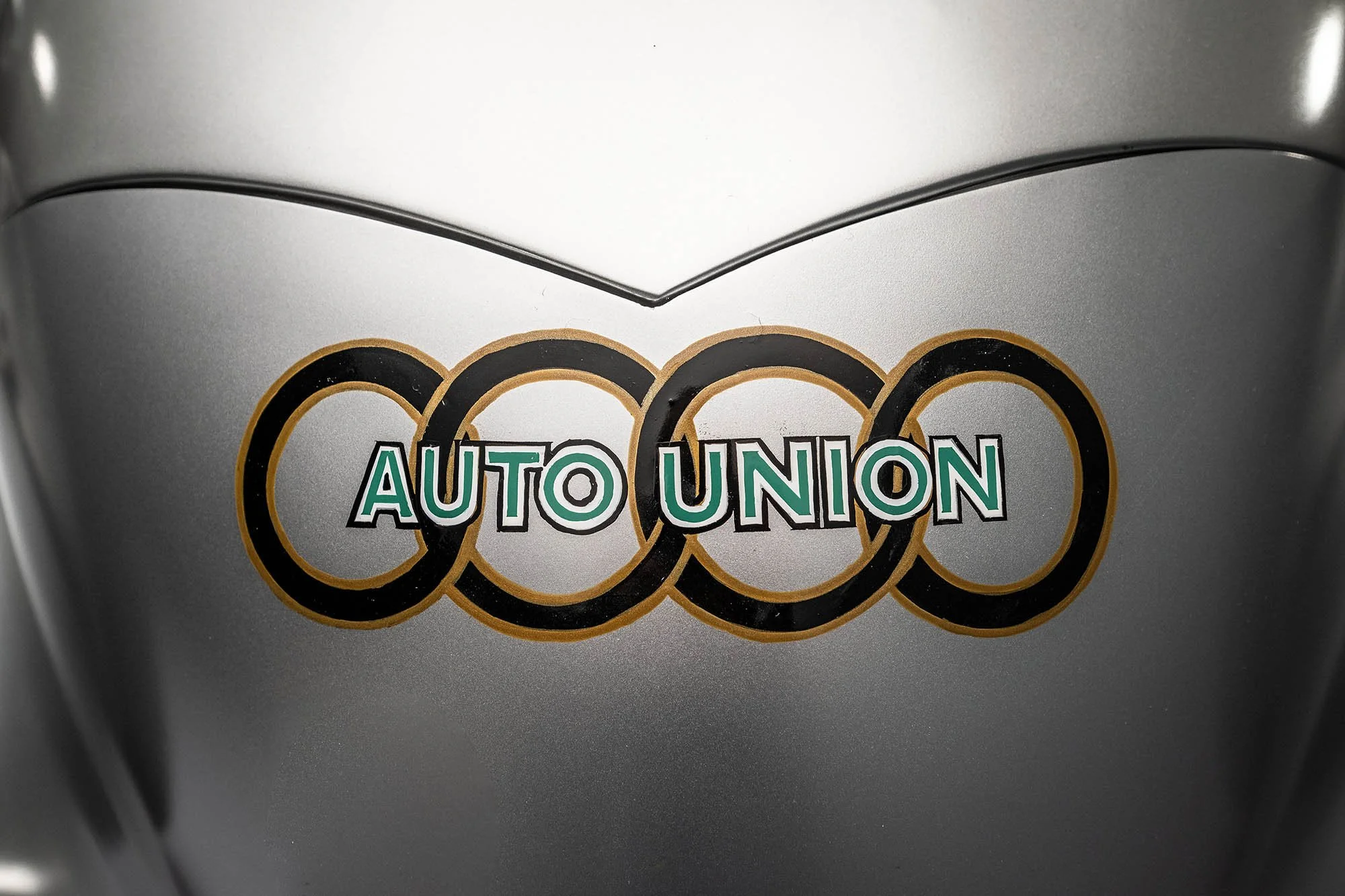
The original Lucca car disappeared long ago. Audi Tradition has now brought it back, commissioning British specialists Crosthwaite & Gardiner to recreate it using historical photographs and archive material. More than three years went into the project, with every component handcrafted for the car.
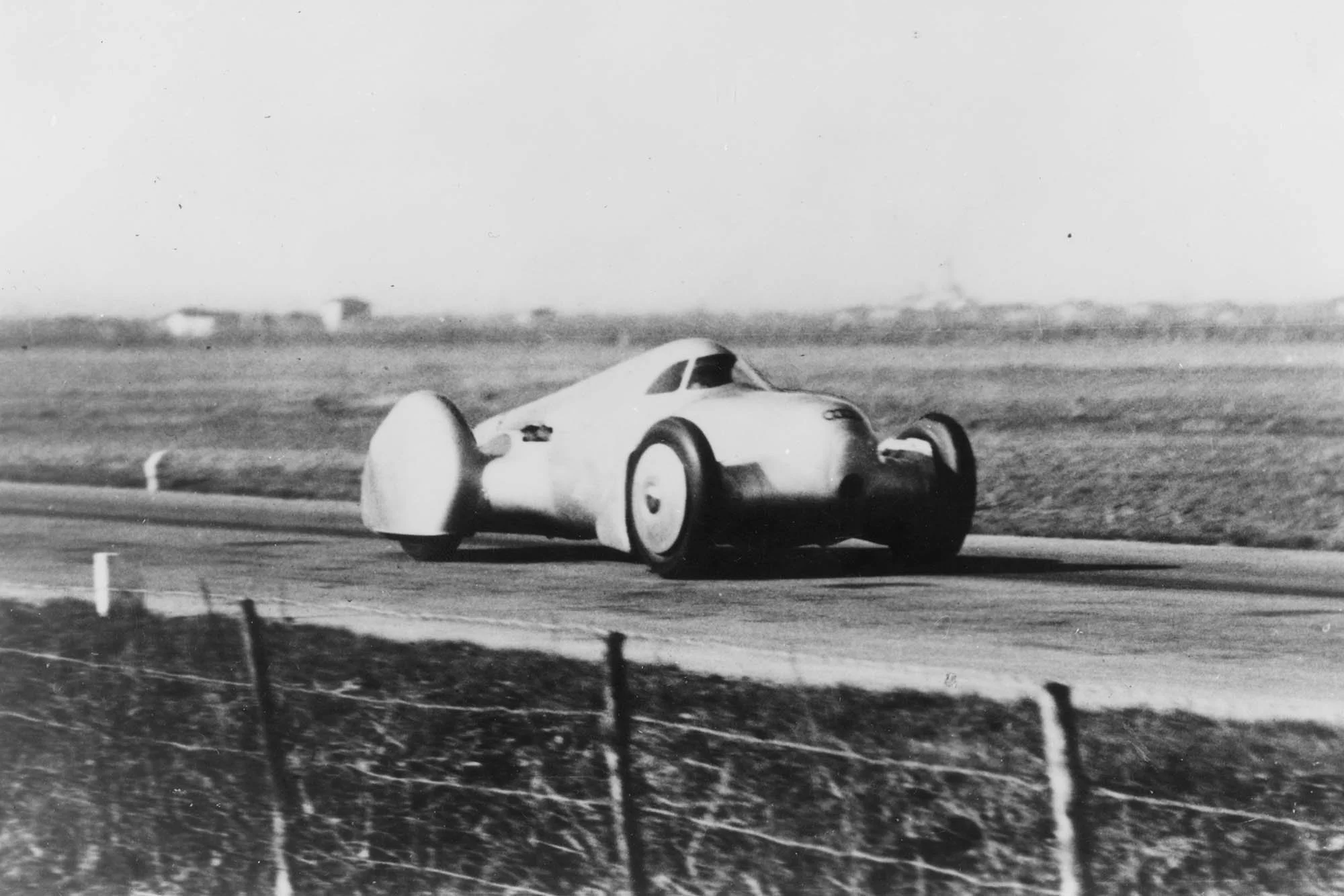
The result is remarkably faithful, right down to the streamlined bodywork and canopy. Audi even put the recreation into its wind tunnel, recording a drag coefficient of 0.43.
Photos © Audi